Discover Singapore: Curated Routes For The Modern Traveller
There are cities that impress, and there are cities that unfold. Singapore belongs firmly in the second camp. At street level, it is a place of morning markets and corner shrines, of tiled shophouses and tree lined avenues. Look up, and the view shifts to glazed facades, sky gardens and sculpted bridges. Between these layers, the city reveals a personality that is both meticulous and quietly playful.
From its lush terraces on Orchard Road, Pan Pacific Orchard sits in the middle of this conversation between nature and architecture. The hotel is a vertical garden that looks out over the city, yet feels remarkably calm inside, a good starting point for guests who want to understand Singapore through its design, neighbourhoods and landscapes rather than race through a checklist of sights.
What follows is a set of handpicked routes that speak to different ways of seeing the city. One is framed by prize winning architecture. Another is stitched from heritage quarters and markets. One follows in the footsteps of a Hollywood film. Others head into gardens, hilltops and wetlands. Taken together, they sketch a portrait of a city that is compact, layered and best enjoyed at a walking pace.
1. Prix Versailles Highlights
Singapore’s “World’s Most Beautiful” Icons
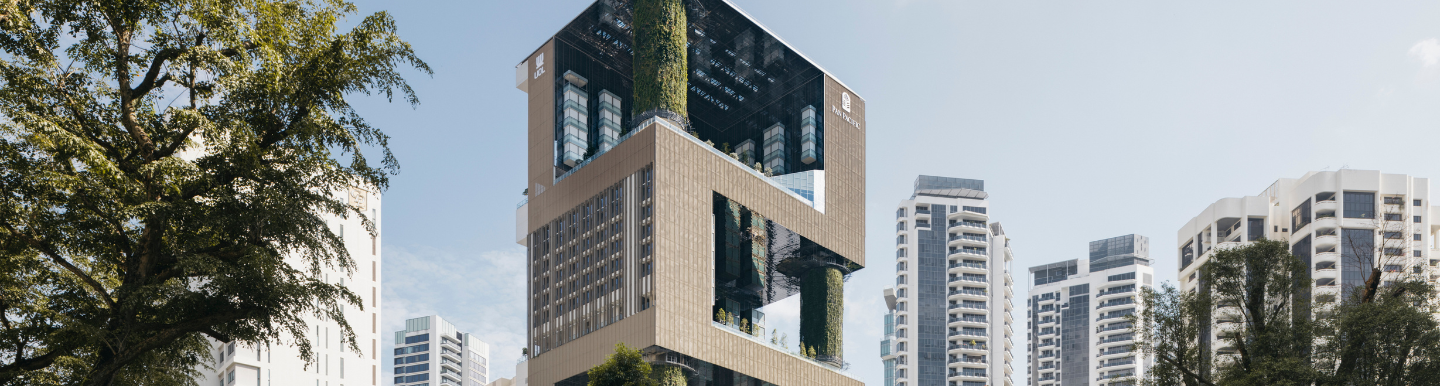
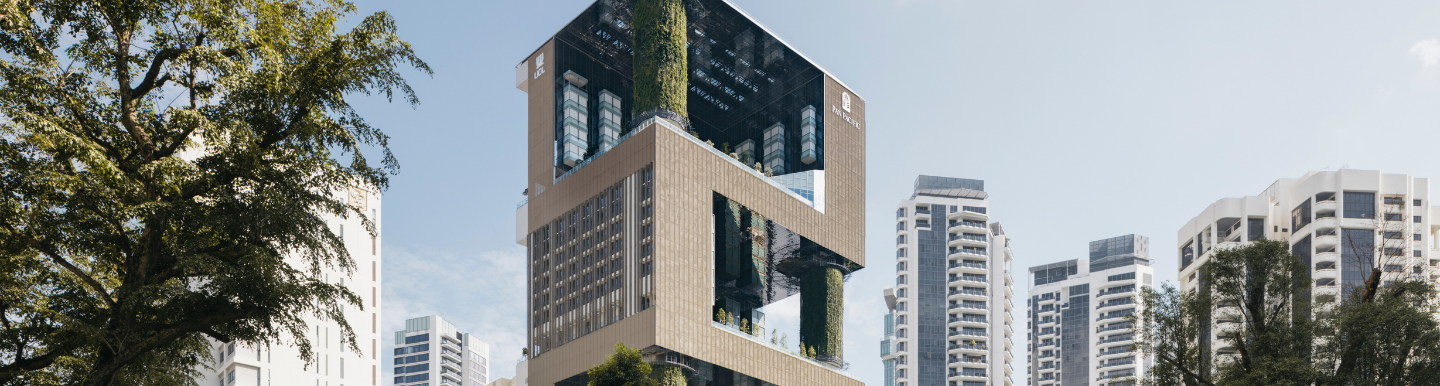
For travellers who notice how a space feels as much as how it looks, Singapore’s Prix Versailles sites form a natural first chapter. Each one shows a different facet of the city’s design culture.
Begin at the hotel itself, recognised among the world’s most beautiful hotels for the way it lifts a lush, living landscape into the sky along Orchard Road. Viewed from Claymore Road, Pan Pacific Orchard appears as a series of distinct terraces, each one carving out its own pocket of calm above the city. The Forest Terrace rises from street level in a sweep of foliage and water, creating an urban oasis where the sound of leaves and moving water softens the rhythm of Orchard. Higher up, the Beach Terrace pairs a shimmering pool and sandy toned deck with skyline views, a resort mood reimagined for the heart of the shopping district. One level above, the Garden Terrace opens into an elevated grove that feels almost private, while the Cloud Terrace crowns the building with slender columns, open air vistas and a sense of lightness that floats above the belt of retail below.
Move slowly from terrace to terrace and the building reveals its intent. The air cools as you climb. Light shifts across water and planting through the day. Boundaries between inside and outside are gently erased. The result is a reimagined city hotel experience, one that builds upwards yet remains rooted in greenery, offering guests a genuine urban oasis in the middle of Singapore.
Changi Airport, Terminal 2
At first glance, Terminal 2 is a transport hub. Spend a little more time and it becomes a study in softness. The hall opens in long, gentle curves. Edges are rounded rather than sharp. Planting beds and nature motifs are woven into the architecture so that greenery does not feel like decoration but part of the structure.
Stand back from the check in aisles and observe how the ceiling steps and slopes to modulate light. There is a sense of restraint, of a team that has chosen calm over spectacle. For a city state that welcomes the world through its airport, the space quietly sets the tone.
Gaia, Nanyang Technological University
Gaia, the mass timber building on the Nanyang Technological University campus, feels almost like a resort that happens to house classrooms. It is a long, low form wrapped around a broad landscaped courtyard. Inside, exposed timber columns and beams give the spaces a warmth that concrete seldom achieves, while deep verandahs and overhangs filter the tropical light.
From certain angles, the building appears to hover lightly on the landscape. For architects and design curious travellers, it offers a glimpse into how Singapore is experimenting with lower carbon construction without sacrificing comfort or elegance.
2. Our Cultural Tapestry
Experience The Mosaic Of Cultures
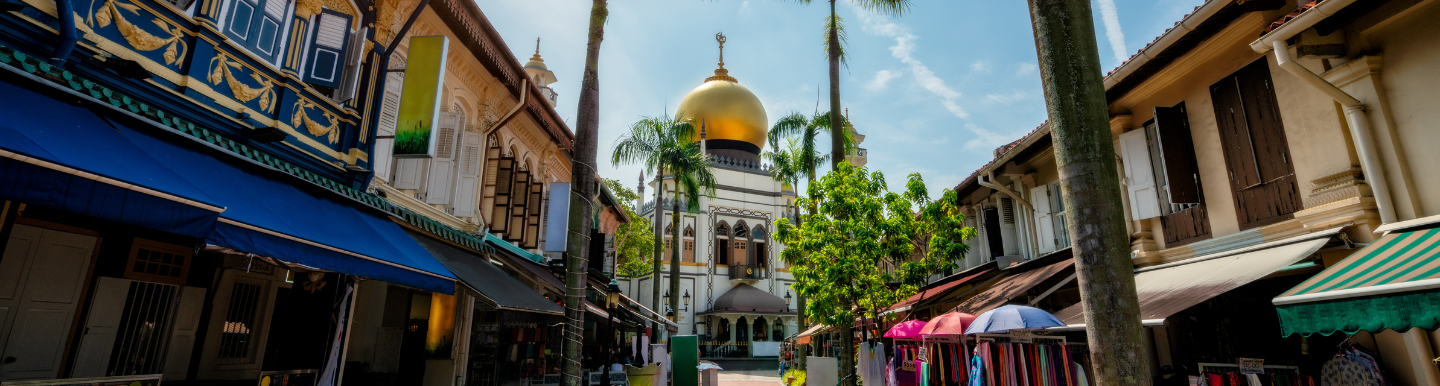
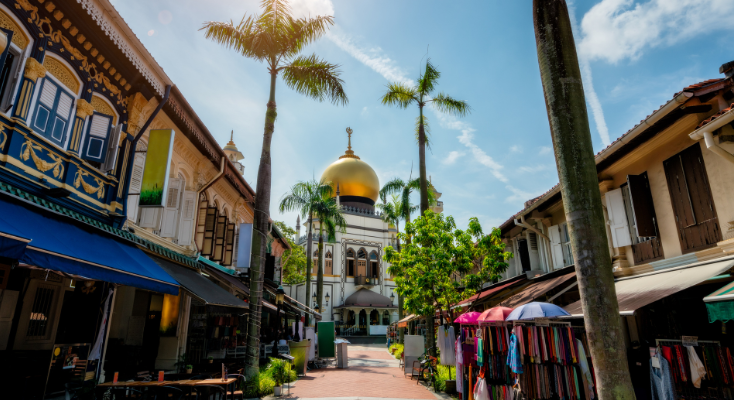
Singapore’s history is not tucked away in museums. It is lived daily in its neighbourhoods, in the cadence of languages on the street, in festival lights and food stalls and incense and textiles. This route traces four districts that together form a compact atlas of the island’s cultural roots.
Peranakan Heritage: Katong and Joo Chiat
In Katong and Joo Chiat, the streets run past some of the most photographed shophouses in the city. Rows of pastel frontages sit shoulder to shoulder: pistachio green next to dusty rose, sky blue beside butter yellow. Each facade is framed by carved timber shutters, ornate plasterwork and panels of Peranakan tiles that combine florals, geometric borders and bright glazes.
Walk the five foot ways and you will notice details at eye level. Old enamel house numbers. Worn thresholds. Decorative vents that once helped houses breathe in the tropical heat. Behind some of these doors are family run bakeries and eateries serving Peranakan dishes that fold Chinese and Malay influences into tangy stews, rich curries and intricate kueh. The district feels residential rather than staged, which is part of its charm.
Malay Heritage: Arab Street and Geylang Serai
Around Arab Street, Kampong Glam balances historical stature with a contemporary, creative energy. The golden dome of Sultan Mosque rises above low shophouses, its gleaming surface catching the sun from almost any angle in the quarter. At street level, bolts of batik, songket and other textiles spill out of shopfronts. Murals appear on side walls. Cafés tuck themselves into narrow units, mixing the rhythms of a working neighbourhood with a café culture that stretches into the evening.
Geylang Serai, a short ride away, reveals a more market driven face of Malay culture. The covered market is a hive of activity: butchers, spice merchants, dessert stalls and nasi padang counters all sharing the same air, heavy with the scent of coconut, grilled meats and fresh herbs. During the month of Ramadan, the area transforms further. Night bazaars, fairy lights and food stalls create a festive corridor where families stroll in clusters, buying snacks and decorations for Hari Raya.
Indian Heritage: Little India
Little India announces itself long before you see it in full. The air grows richer with spice and incense. Music drifts out from shops selling DVDs and streaming from smartphones. The pavements become more crowded as you approach Serangoon Road, where jewellery stores, flower garland makers and grocers line up in dense succession.
The Sri Veeramakaliamman Temple anchors the area with its crowded gopuram, every inch populated by painted deities and mythic figures. Step inside and you enter a cool, tiled hall with pillars and shrines that feel a world away from the traffic outside. Nearby, markets and eateries offer everything from biryani to masala dosa to brightly coloured sweets displayed in careful rows. The energy is constant but rarely overwhelming.
Chinese Heritage: Chinatown
Chinatown is perhaps the most visually familiar of the four quarters, often photographed for its shopfronts strung with lanterns and framed by the towers of the Central Business District. Yet to experience it properly is to slow down.
Make time for the Buddha Tooth Relic Temple, a layered structure with deep red columns and tiered roofs that open to an interior of rich timber, gold ornament and quiet devotion. A short walk away, Sri Mariamman Temple and Jamae Mosque stand as reminders that this has long been a district where communities overlap and coexist.
Between these landmarks, streets host a mixture of traditional medicine halls, tea merchants, household goods shops and stalls catering to both tourists and locals. It is a place to wander, to stop for kopi in a traditional coffeeshop, to watch the ebb and flow of daily life.
3. ‘Crazy Rich Asians’ Inspired Tour
Relive The Film’s Glamorous Locations
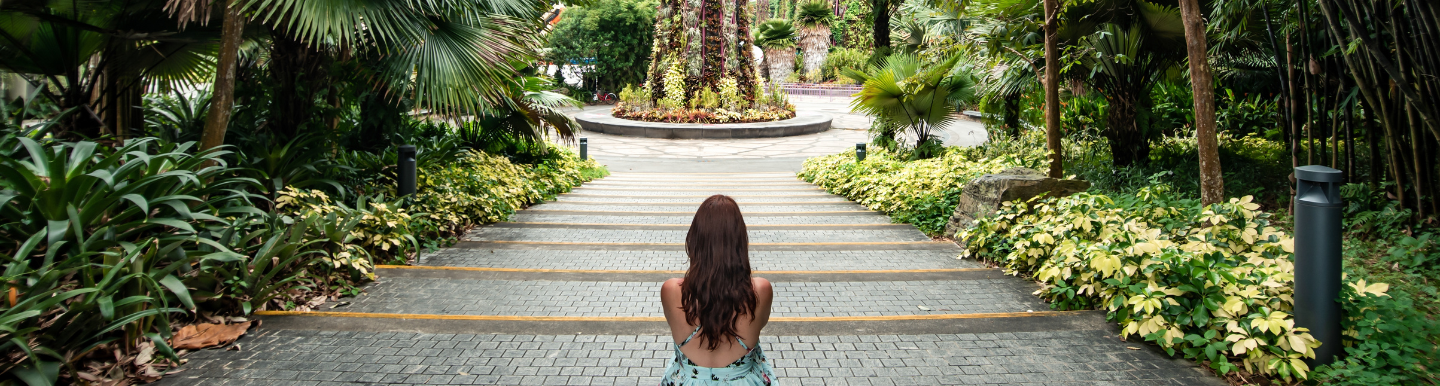
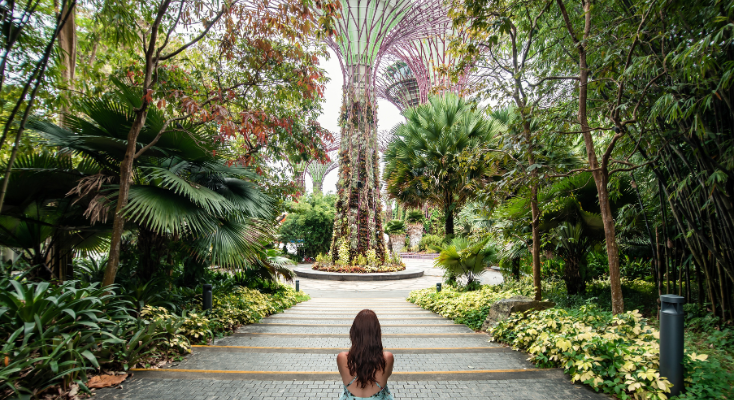
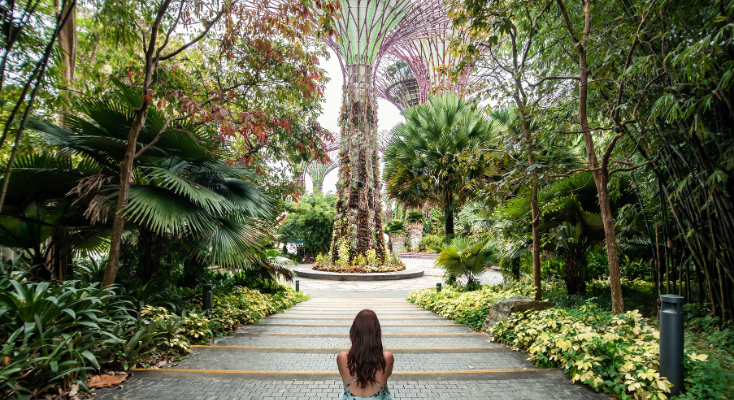
Cinema tends to compress cities into a handful of scenes. This route unpacks those scenes and lets you inhabit them properly, with time to appreciate the layers that a wide shot cannot show.
CHIJMES
CHIJMES began as a Catholic convent and school and still carries the calm geometry of its original purpose. Cloistered walkways define the courtyards. Pointed arches and tracery give rhythm to the facades. The former chapel, now an event space, retains its lofty proportions and stained glass.
In the film, this is the setting for an extravagant wedding. In daily life, it is a place where office workers, families and visitors drift through for lunch, drinks or the simple pleasure of sitting under a cloister listening to the soft echo of conversations. The drama of the architecture needs no extra staging.
Long Bar, Raffles Hotel
To visit the Long Bar is to step into a curated memory of colonial era Singapore. Ceiling fans whirl lazily above. Rattan backed chairs and timber panelling create a palette of browns and creams. Bowls of peanuts invite guests to crack the shells and drop the remnants directly on the floor, an informal ritual that cuts through any sense of stiffness.
A Singapore Sling here is less about the cocktail and more about the setting. It is a leisurely interlude, a pause between neighbourhoods.
Marina Bay Sands SkyPark
The three towers of Marina Bay Sands are familiar from almost every postcard and skyline shot. What the stills cannot quite convey is the sensation of standing on the SkyPark, a deck that seems to float above the bay. From one side, you look out over Gardens by the Bay and the ships anchored beyond. From the other, over the CBD, the Padang and the colonial core.
The infinity pool that featured in the film is reserved for hotel guests, but the public observation deck and the restaurants along the edge share the same sense of perspective. This is the city laid out in miniature, shifting with the light from late afternoon into dusk.
Gardens by the Bay
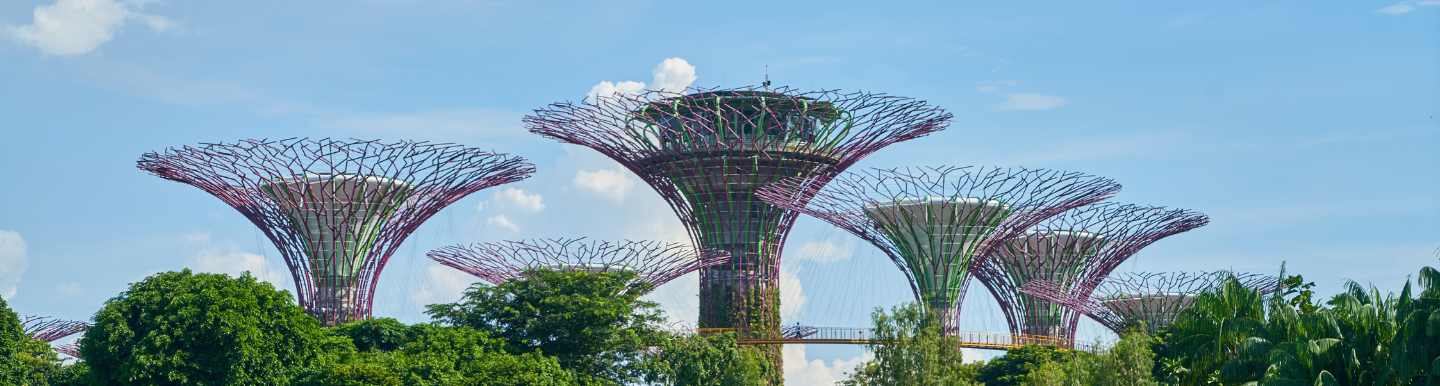
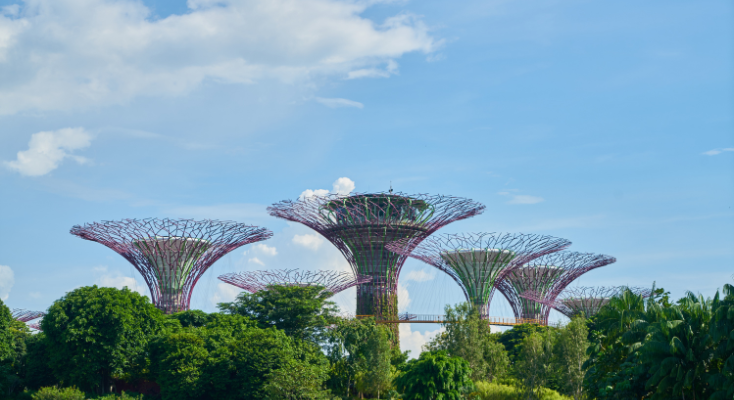
Gardens by the Bay is where Singapore’s ambitions for a “City in a Garden” are given a theatrical stage. The Supertree Grove rises from a carpet of planting, each trunk woven with climbers and epiphytes. In the evening, the trees become vertical lanterns, pulsing with colour in a choreographed light show that pulls eyes upward.
Inside the Cloud Forest dome, a cool mist hangs in the air. A man made mountain covered in vegetation rises from the floor, its waterfall sending a continuous rush of sound through the space. Elevated walkways wind around this mass, giving different vantage points onto leaves, water and the steel and glass shell that holds it all. It is theatrical without feeling artificial.
Newton Food Centre
Newton Food Centre stands for a different kind of glamour. Plastic stools, laminated menus, bright strip lighting and the steady clatter of plates and cutlery. This is where many visitors have their first proper hawker meal, ringed by stalls offering chilli crab, satay, Hainanese chicken rice, fried carrot cake and more.
It is best visited in the evening, when the heat softens and the air carries the scent of smoke and spice. In the film, it is a convivial, noisy backdrop. In person, it can feel like the true heart of the city: informal, social and driven by appetite.
Collyer Quay and Merlion Park
Collyer Quay curves gently along the water’s edge, linking heritage buildings and newer developments with a generous promenade. Look for the red lamp at Clifford Pier, a small but potent reminder of the site’s history as a landing point for migrants and travellers arriving by sea.
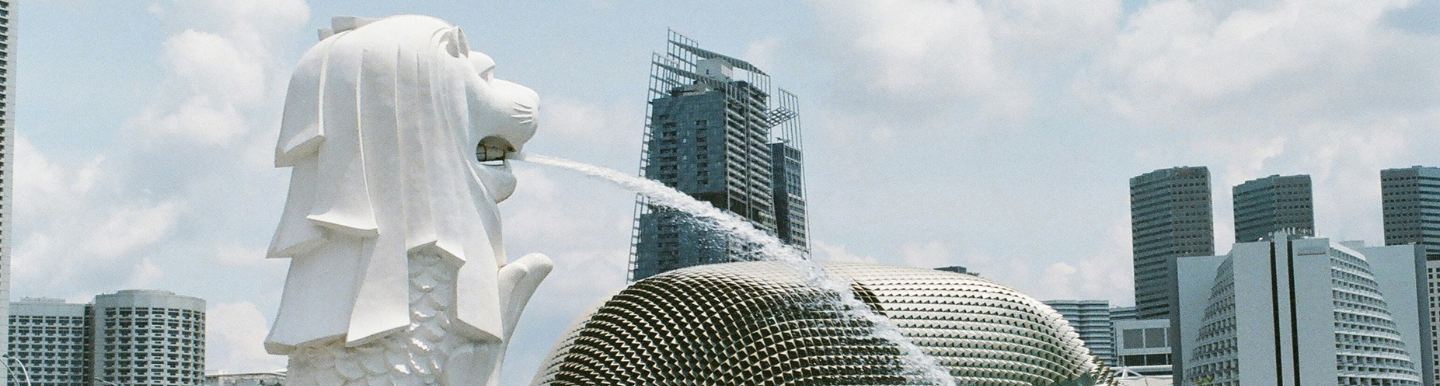
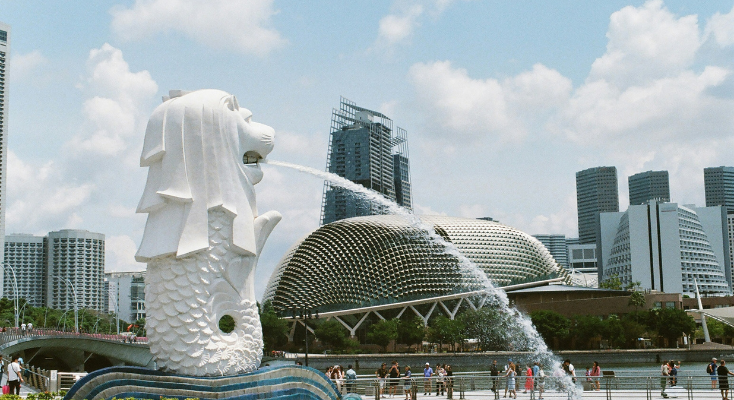
A short walk away, Merlion Park sits at the junction of multiple views. The Merlion statue sends a continuous arc of water into the bay, while behind it Marina Bay Sands rises across the water and the CBD towers cluster nearby. It is one of the most recognisable scenes in Singapore, yet standing here, you understand why: it gathers together so many of the city’s layers in one frame.
4. Nature Day Tour
From Garden Calm To Hilltop Outlooks
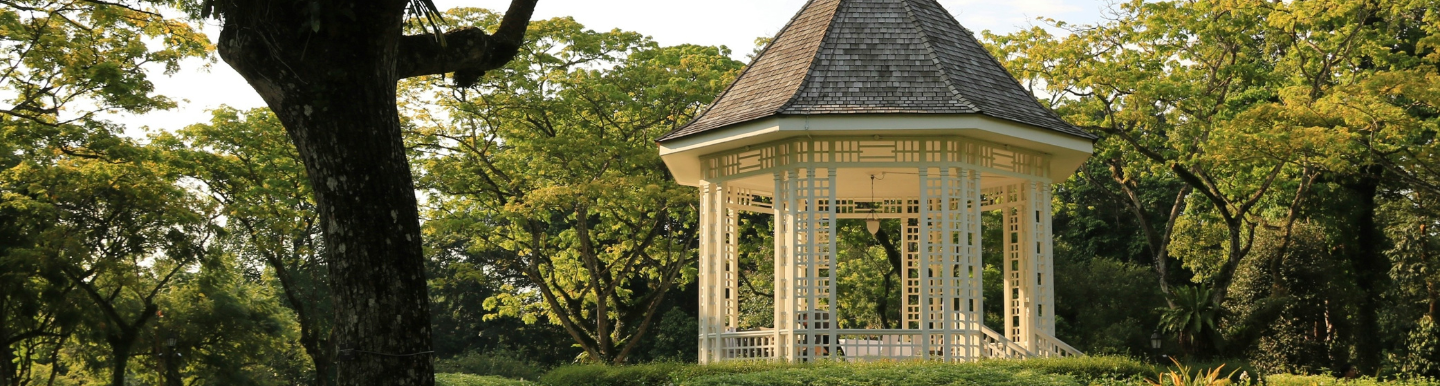
For all its glass and steel, Singapore has kept a remarkable amount of green space within easy reach. This route moves from manicured gardens to historic hillsides and elevated trails, before suggesting an excursion to one of the island’s richest natural habitats.
Singapore Botanic Gardens, UNESCO World Heritage Site
The Botanic Gardens are a classic for good reason. Enter from almost any gate and paths draw you towards water, lawn, or shaded grove. Around Swan Lake, trees lean towards the water and, if you are fortunate, you may see the slow, silent glide of a swan cutting a path across the surface.
The National Orchid Garden is the most concentrated expression of Singapore’s horticultural pride, with over a thousand species and two thousand hybrids displayed in carefully composed beds and pergolas. Here you will find Vanda Miss Joaquim, the national flower, alongside cultivars named for visiting dignitaries and notable figures.
Elsewhere in the gardens, a rainforest trail leads through a remnant of primary forest more than a century old, allowing you to experience a fragment of the landscape as it might have been before the city rose around it.
Fort Canning Park
Fort Canning is a hill layered with stories. Today, its walking paths wind past the remains of fortifications, spice gardens that reference early agricultural experiments, and the Sang Nila Utama Garden, with reflecting pools, Southeast Asian flora and stone carvings that pay tribute to the founding myths of Singapura.
The Battlebox, a preserved underground command centre from the Second World War, offers guided tours for those interested in military history, while the park’s Gothic Gate, Fort Gate and the now iconic spiral staircase – the Fort Canning Tree Tunnel – provide more than enough material for photographers.
Henderson Waves, Southern Ridges & Beyond
Head south and the city opens up into a series of linked ridges and parks. Henderson Waves, Singapore’s highest pedestrian bridge, rolls across the skyline in a series of sinuous, wave like curves. Slats of timber form sheltered pockets where you can sit and look out towards the port, the sea and the clusters of housing that mark the city’s edge.
From here, the Southern Ridges extend for roughly ten kilometres, connecting Mount Faber, Telok Blangah Hill and Kent Ridge Park via elevated walkways and forest trails. Along the way, you might detour to Gillman Barracks, where former military buildings now house galleries, or Reflections at Bukit Chandu, a memorial honouring the Malay Regiment and the Battle of Pasir Panjang.
Chek Jawa Wetlands, Pulau Ubin
For a more elemental experience, Chek Jawa lies on the eastern tip of Pulau Ubin, itself reached by a short bumboat ride from the mainland. Here, six different ecosystems meet: mangroves, seagrass lagoons, coral rubble, coastal forest, rocky shore and sandflats. Boardwalks and a viewing tower allow visitors to explore these habitats without disturbing them.
Tide and timing matter. Low tide reveals more of the seagrass and intertidal life. It is worth planning half a day for the journey, including the slow trip across the water and the onward ride to the wetlands, simply to enjoy the contrast with the more polished mainland.
5. Wildlife Wonders
Take A Walk On The Wild Side


Singapore’s wildlife attractions are clustered largely around the Mandai area, with an additional marine anchor on Sentosa. Together, they create a dense hub of encounters with animals and ecosystems from around the world.
Singapore Zoo
The Singapore Zoo is known for its open concept enclosures, where barriers are often disguised as moats or changes in level rather than fences. The result is a series of habitats that feel less like exhibits and more like frames cut from wider landscapes.
Highlights include the free ranging orangutan areas, where the apes can be seen moving with a slow, deliberate grace from tree to tree, and the Elephant and White Tiger enclosures, which are carefully constructed to offer both clear views and shaded retreats. For families, Rainforest KidzWorld provides interactive play set against an educational backdrop.
River Wonders
River Wonders takes a different approach, focusing on river systems rather than continents. Each zone is themed after major waterways such as the Amazon, Mekong and Yangtze, with both animal and plant species curated to reflect those ecosystems.
The Giant Panda Forest is the clear favourite, home to Kai Kai and Jia Jia, but there is a quiet pleasure in watching manatees circle slowly in their pool or freshwater stingrays glide past in broad arcs.
Night Safari
When the sun sets, the Night Safari introduces visitors to a different cast of characters. This is the world’s first nocturnal zoo, spread over 35 hectares of tropical forest.
Trams move through dimly lit landscapes, while walking trails lead closer to enclosures where leopards, binturongs, flying squirrels and greater mouse deer go about their night time routines. Shows like Creatures of the Night add an interpretive layer, but some of the most memorable moments come from quiet observation along the paths.
Bird Paradise
Opened in 2023, Bird Paradise reshapes the traditional aviary into a sequence of immersive environments. Visitors move through zones that echo the Amazonian rainforest, African wetlands and other habitats, with flocks of flamingos, hornbills and parrots providing both colour and sound. The scale is impressive, yet the experience still allows for intimate encounters with individual species.
Mandai Boardwalk
For a softer experience, the Mandai Boardwalk runs along the edge of the reservoir, threading through lush greenery and offering glimpses of birds, dragonflies and water views. It is an ideal counterpoint to the more structured attractions, particularly in the early morning or late afternoon.
Singapore Oceanarium, Sentosa
Finally, the Singapore Oceanarium on Sentosa shifts the focus beneath the surface. Vast viewing panels reveal manta rays, sharks and schools of fish moving through a shared volume of water, while more intimate reef galleries showcase coral formations and smaller species.
The effect is contemplative. Moving from tank to tank, visitors are reminded of the scale and fragility of the marine world that surrounds the island.
Closing Reflection
By the time you return to Orchard Road, the city begins to arrange itself differently in your mind. The award winning timber of Gaia and the terraces of Pan Pacific Orchard sit on the same mental map as the five foot ways of Joo Chiat, the lanterns of Chinatown, the Supertrees at Gardens by the Bay and the boardwalks of Chek Jawa. Markets and museums, hawker centres and skyparks, all feel less like separate attractions and more like chapters in the same story.
Back at the hotel, stepping out onto one of the terraces, you can hear the softened echo of the city below and see greenery rising level after level into the evening air. It is an invitation to exhale, to replay the day’s impressions and to decide which route to follow next. In a city that rewards curiosity, there is always another layer to uncover.
Download The Takeaway Compendium
For a beautifully designed, portable version of these curated routes, complete with maps and visual highlights, you can download our Discover Singapore Takeaway Compendium below. It is an easy companion for days spent exploring the city on foot, by train, or from terrace to terrace.
Discover More Destination Insights

How to Plan a Cultural Travel Experience in Singapore
Find Out More
How to Plan a Meditation Retreat in Singapore | Pan Pacific Orchard
Find Out MoreView More Offers
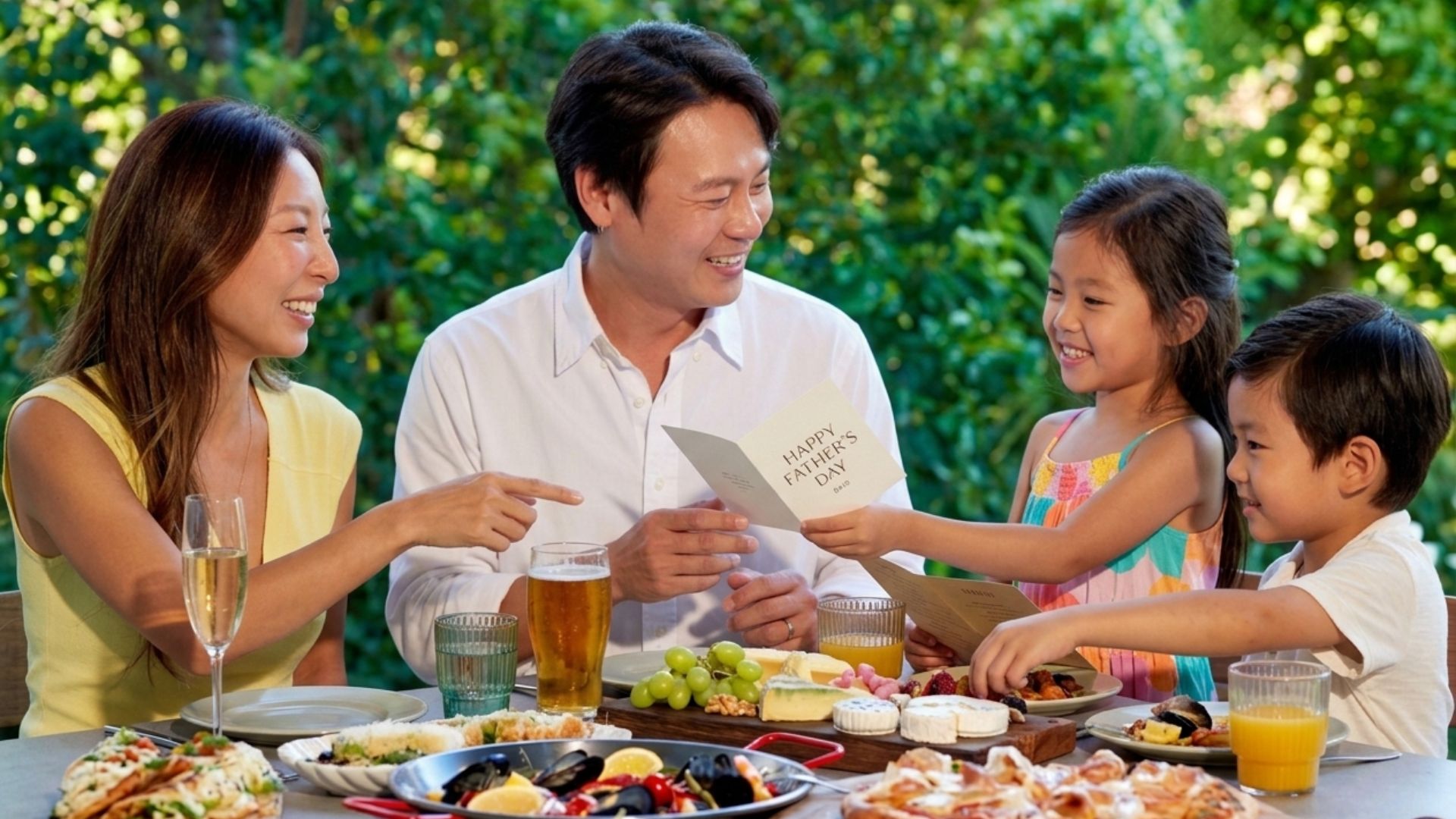
A Sunday Brunch Dedicated to Fathers
This Father's Day, gather around the table for a celebration shaped by bold flavours.
More DetailsPan Pacific Orchard, Singapore

Every Meeting Matters
Your Vision, Our Venues - Book your next event now to enjoy an array of special privileges.
More DetailsPan Pacific Orchard, Singapore

Saturday Mediterranean Brunch
Saturdays are made for indulgence.
More DetailsPan Pacific Orchard, Singapore
A Sunday Brunch Dedicated to Fathers
This Father's Day, gather around the table for a celebration shaped by bold flavours.
More DetailsPan Pacific Orchard, Singapore
Every Meeting Matters
Your Vision, Our Venues - Book your next event now to enjoy an array of special privileges.
More DetailsPan Pacific Orchard, Singapore
Saturday Mediterranean Brunch
Saturdays are made for indulgence.
More DetailsPan Pacific Orchard, Singapore
-
HOTELS AND RESORTS


-
SERVICED SUITES


-
WELLNESS AND LIFESTYLE


- Group Homepage
- About Us
- Development Opportunities
- Newsroom
- Careers
- Pan Pacific Connections
- Frequent Flyer Programme
Toll-Free Room Reservation Numbers
Want to Leave Us a Message Instead?
Send an EnquirySign Up for Our Newsletter
Be the first to know about our exclusive deals.
Download Our Mobile App


Get the Latest from Our Socials

