Itinerary
Jakarta. Southeast Asia's most populous capital, home to more than 33 million people, is a city of genuine contrasts where Dutch colonial architecture stands alongside gleaming financial towers, and where the call to prayer from the world's largest mosque carries over the hum of one of the region's most dynamic economies.
Travellers who arrive with patience and curiosity find a city that gives back in remarkable proportion.
Five days in Jakarta is the right measure of time. It is enough to move through the city's distinct layers with intention: the monumental heart of central Jakarta, the preserved colonial quarter of Kota Tua, the creative and culinary districts of South Jakarta, the natural escapes that ring the city, and the world-class retail and street-food culture that defines Jakarta's evenings.
Each day builds on the last, and the city begins to feel less like a destination to be decoded and more like a place that simply draws one deeper in.
The itinerary that follows is structured to reflect Jakarta at its most rewarding. It favours the specific over the general, the local over the obvious, and the unhurried over the rushed. The Thamrin corridor anchors everyday life, offering swift access via the Jakarta MRT to each neighbourhood and landmark along this route.
Day 1
Central Jakarta's Monuments and Skyline
The natural starting point for any first day in Jakarta is MONAS, the 132-metre National Monument that rises from Merdeka Square at the heart of the city. Built to symbolise Indonesia's independence, Monas rewards those who ascend to its observation deck with a panoramic reading of Jakarta's scale: the low-rise sprawl to the north, the glass towers of the CBD to the south and the distant shimmer of the Java Sea.
The surrounding park is where Jakartans gather at weekends, and the energy of that public life is as much a part of the experience as the monument itself.
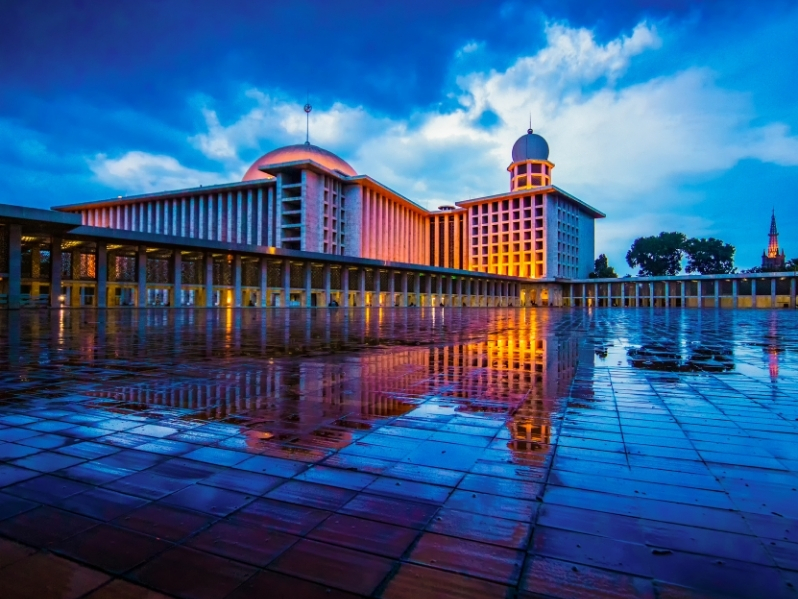
A short walk from Monas stands Istiqlal Mosque (pictured above), the largest mosque in Southeast Asia, with a main prayer hall that accommodates up to 120,000 worshippers. Non-Muslim visitors are welcomed outside of prayer times, and the scale of the interior is genuinely breathtaking.
Directly opposite, separated by a symbolic bridge of unity, Jakarta Cathedral presents its twin neo-Gothic spires in striking counterpoint, the two buildings together forming one of the city's most quietly profound visual experiences.
The evening belongs to the Thamrin strip, where a cluster of rooftop bars above the CBD's tower blocks offer sundowners against a skyline that comes into its own after dark. The Welcome Monument roundabout at the south end of Jalan MH Thamrin marks the city's axis. It is best appreciated from above, glass in hand, as Jakarta's lights begin to multiply.
Day 2
Kota Tua and Jakarta's Colonial Quarter
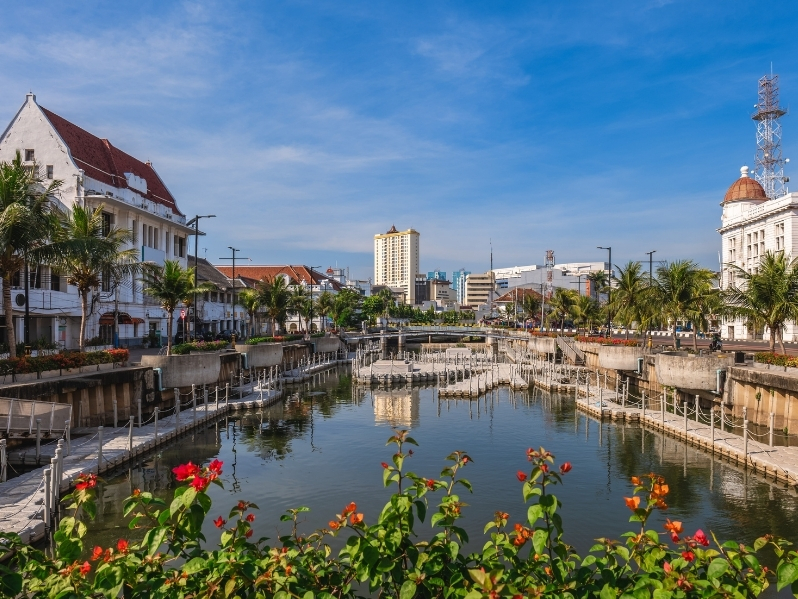
Kota Tua, Jakarta's old Dutch colonial quarter, rewards an early start. Fatahillah Square is the social and architectural heart of the precinct, flanked by three museums that together form a coherent portrait of the city's Batavian past.
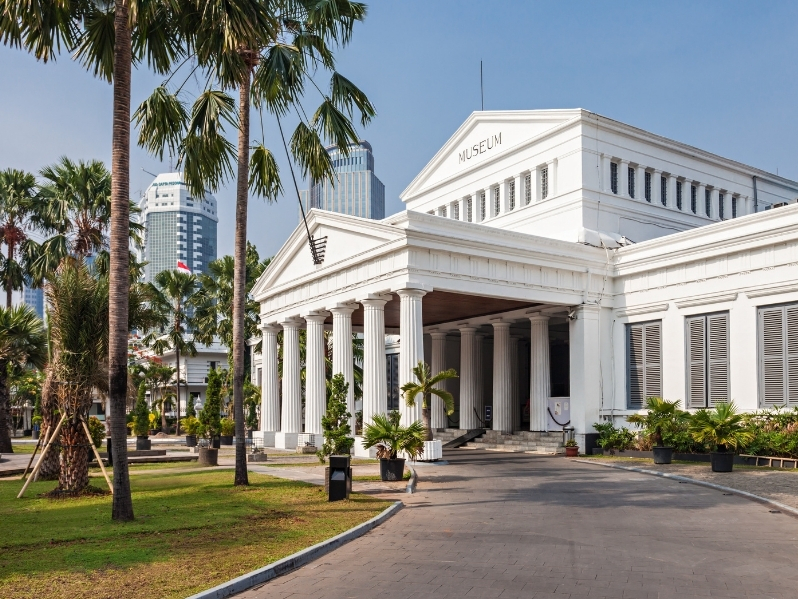
The Jakarta History Museum occupies the former town hall and contains Dutch-era furniture, maps and colonial artefacts; next door, the Wayang Museum houses one of the country's finest collections of traditional puppet art across several Southeast Asian traditions.
From Fatahillah Square, a fifteen-minute walk north reaches Sunda Kelapa Harbour, where wooden pinisi schooners from the islands of Sulawesi and Kalimantan continue to dock and unload cargo much as they have for centuries.
The sight of the tall-masted fleet against the pale Jakarta sky is one of the city's most distinctive, and the working harbour has a texture and smell that no curated attraction can replicate.
The afternoon transitions to Glodok, Jakarta's Chinatown, where the street-food strip along Jalan Pancoran offers everything from bakmi (a local noodle dish) to roasted duck over rice. The neighbourhood's century-old shophouses, its temple courtyards and its tightly packed market lanes carry a layered history that fills out any understanding of what Jakarta has always been: a port city shaped by many hands.
Day 3
End your morning garden crawl at the nearby Pan Gate Scenic Area. This Suzhou landmark is estimated to be over 2,500 years old. Heritage buffs would delight in the ancient artefacts and structures present here—the historic Ruiguang Pagoda is the earliest surviving pagoda in Suzhou, while the Panmen Gate is the oldest city gate of Suzhou.
Enjoy complimentary access to this attraction when you book with Pan Pacific Suzhou at least two days in advance. You can literally access Panmen Gate direct from the hotel. On top of that, you will also enjoy 20% off on our best available rate, as well as a 20% discount at our restaurants.
Day 4
Islands, Parks and Breathing Space

A full day away from the city's density is well placed in the middle of a Jakarta itinerary. On the northern waterfront, regular boats depart for the Thousand Islands (Kepulauan Seribu), a chain of small coral islands scattered across the Java Sea.
The closer islands, such as Pulau Bidadari and Pulau Onrust, are reachable in under an hour and offer clear water, snorkelling reefs and a pace of life entirely removed from the mainland. The contrast is evident: Jakarta's urban intensity makes the islands' silence feel all the more complete.
For those who prefer to stay on land, Taman Mini Indonesia Indah is a full-day option that requires no boat ride. The 150-hectare cultural park in East Jakarta features miniature replicas of traditional architecture from 33 of Indonesia's current 38 provinces, alongside museums dedicated to transport, stamps, insects, and Indonesian history.
It is a place designed for families, yet rich enough in detail to hold the attention of any curious traveller seeking a structured introduction to the country's geographic and cultural breadth.
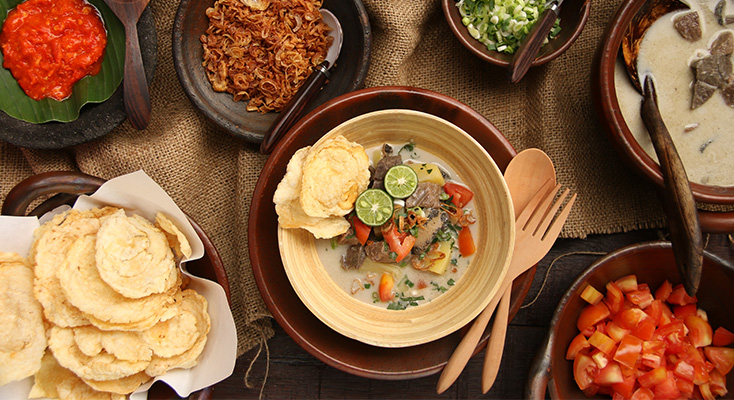
Both options share the same logic: Jakarta is large enough to offer a genuine natural and cultural escape without leaving the city boundaries. The Ancol waterfront road along Jalan Lodan Timur makes for a pleasant early morning walk before the boats depart, and the food stalls near the marina serve a soto ayam (a local chicken noodle dish) breakfast worth arriving early for.
Day 5
Mall Culture and Pecenongan's Night Food
Jakarta's relationship with its shopping malls is unlike that of any other city in Southeast Asia, and the final day is the right moment to engage with it seriously.
The linked complexes of Grand Indonesia and Plaza Indonesia on Jalan Thamrin form the city's most prestigious retail address, with international luxury labels, Indonesian designers, a full floor of food options, and a cinema complex occupying a combined space that takes a full day to navigate properly.
A covered walkway connects the two malls and together represents Jakarta's retail ambitions at their most refined.
A short taxi or MRT journey south leads to Pacific Place in the SCBD, which tilts slightly younger and more design-conscious in its tenant mix, and is worth visiting for its atrium's architecture alone.
By late afternoon, the sensible move is to return north and spend an hour at the Welcome Monument and the surrounding Bundaran HI plaza before the evening begins. The roundabout transforms at dusk as the fountains are lit and the crowds gather in Thamrin.
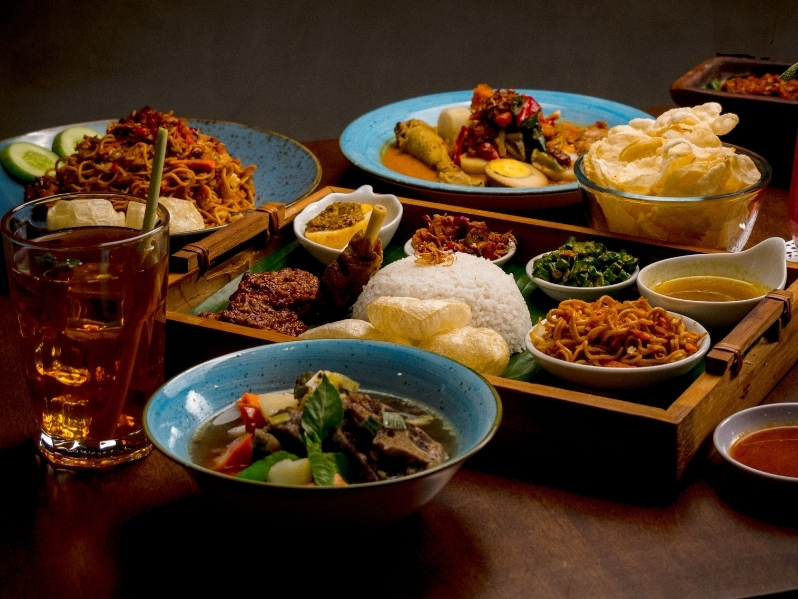
Pecenongan Street, in Central Jakarta's Gambir district, marks the proper end to five days in the city. The late-night food strip runs from early evening into the small hours, with sate (skewered grilled meat), grilled corn, martabak egg pancakes, and the famously rich es krim goreng (fried ice cream) among the dishes that have given the strip its reputation across generations of Jakartans.
The food is the point, but so is the scene: the long rows of plastic tables, the charcoal smoke, the families and groups settling in for a long evening. It is, by any measure, a fine way to end.
Your Base in the Heart of Jakarta
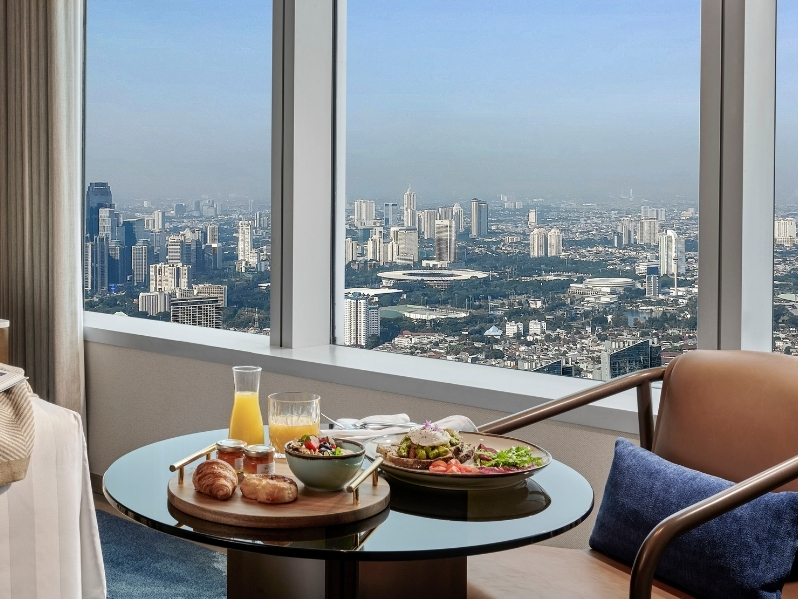
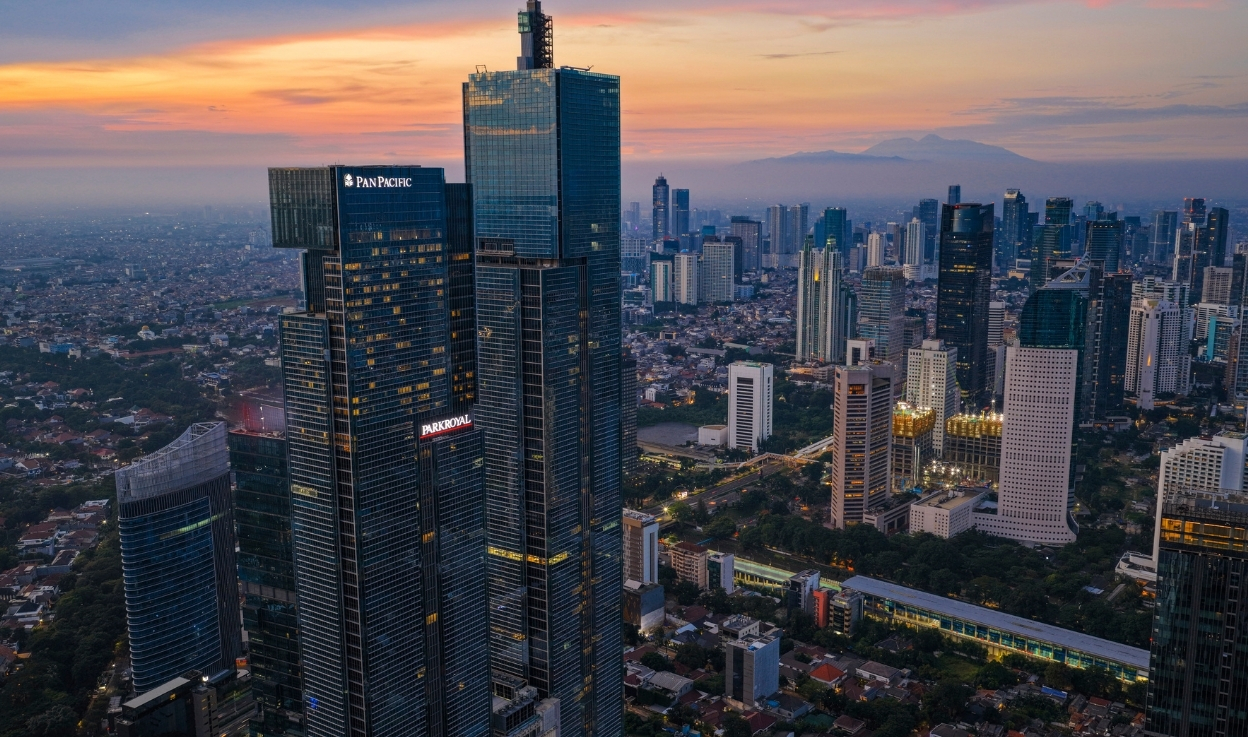
For travellers following this itinerary, where one stays in Jakarta matters considerably. Pan Pacific Jakarta occupies floors 71 to 90 of Luminary Tower within the Thamrin Nine complex, and the experience of arriving at this altitude above the city is itself one of Jakarta's most striking impressions.
The hotel's full-service offering reflects the Pan Pacific brand at its most gracious: refined rooms and suites with floor-to-ceiling views across the Jakarta skyline, attentive personalised service delivered with genuine warmth and the quiet confidence of a property that sets its own standard.
Pan Pacific Jakarta is the address for travellers who travel with discernment and expect every detail to be considered.
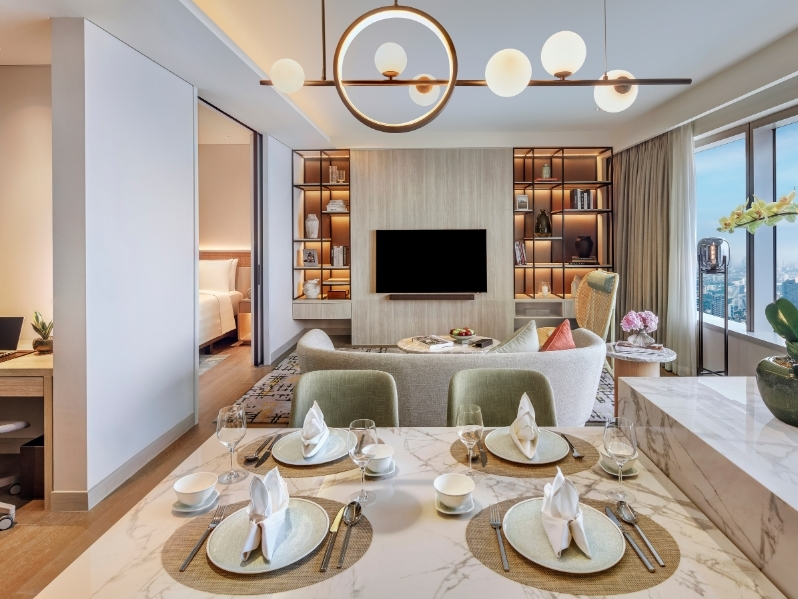
For guests who plan to settle into Jakarta's rhythm over several days rather than simply pass through, PARKROYAL Serviced Suites Jakarta (pictured above), located within the same Thamrin Nine complex, offers a distinct, complementary proposition.
The spacious suites come with fully equipped kitchenettes, separate living areas and city views, making them the natural choice for longer stays, families or business travellers who prefer the ease and independence of a residential-style base.
We designed the suites to give guests the freedom to move through Jakarta at their own pace, whether that means a late return from Pecenongan Street or an early start to Ancol Marina.
Both properties place guests steps from Grand Indonesia, the Dukuh Atas MRT station, and the Welcome Monument, making every day of this itinerary logistically straightforward from the first morning onward.
Whether you arrive seeking the elevated luxury of Pan Pacific or the spacious independence of PARKROYAL Serviced Suites, the Thamrin Nine complex is where Jakarta is most fully at your disposal. From here, the city opens out in every direction, and five days prove to be exactly the right length of time.

Enter Title
-
Hotels and Resorts


-
Serviced Suites


-
Wellness and Lifestyle


Sign Up for Our Newsletter
Be the first to know about our exclusive deals.
Download Our Mobile App


Get the Latest from Our Socials

