Vancouver's Blue Space: Finding Restoration by the Water
Vancouver is a city that frames itself in water. Burrard Inlet stretches along its northern edge, the Strait of Georgia opens to the west and the Fraser River winds through its southern neighbourhoods, creating a metropolitan landscape that is never far from the sight and sound of the sea. This geography is not incidental. It is the defining character of the city, shaping how people move, pause and recover within it.
For the well-travelled visitor arriving from across the Pacific or beyond, the waterfront functions as a natural decompression zone, offering a quality of stillness that even the most refined urban environments cannot manufacture.
The concept of blue space refers to outdoor environments dominated by water, and Vancouver possesses one of the most accessible and generous examples of urban blue space anywhere in the world. Research increasingly confirms what harbour-side residents have always known instinctively: proximity to water lowers cortisol levels, restores directed attention and lifts mood in ways that green parks and city streets alone cannot replicate. The science of blue health now supports what travellers experience naturally when they stand at the edge of the inlet and let their gaze settle on the horizon.
Vancouver invites a particular kind of visit, one lived by the water rather than the clock. Its seawalls, harbours and inlets are not attractions to be crossed off an itinerary but slow rituals to be returned to, at first light and at dusk, until the city's rhythms begin to feel like one's own.
Sign up for Pan Pacific DISCOVERY
Join Pan Pacific DISCOVERY and unlock a wealth of benefits, with or without a stay. Enjoy exclusive member rates, specially curated Local Offers and Experiences, and access to our rewards currency, DISCOVERY Dollars (D$).
SIGN UP NOWMorning at the Harbourfront
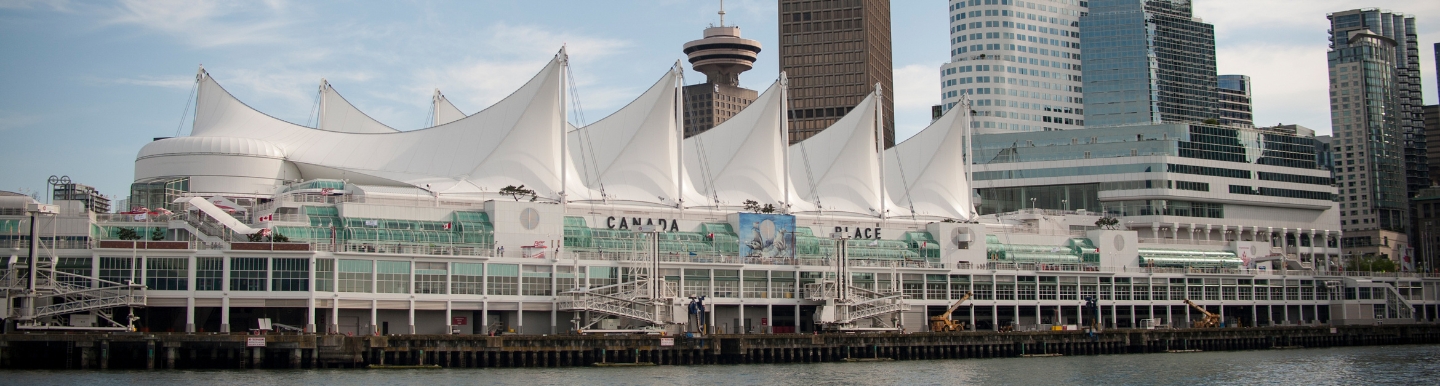
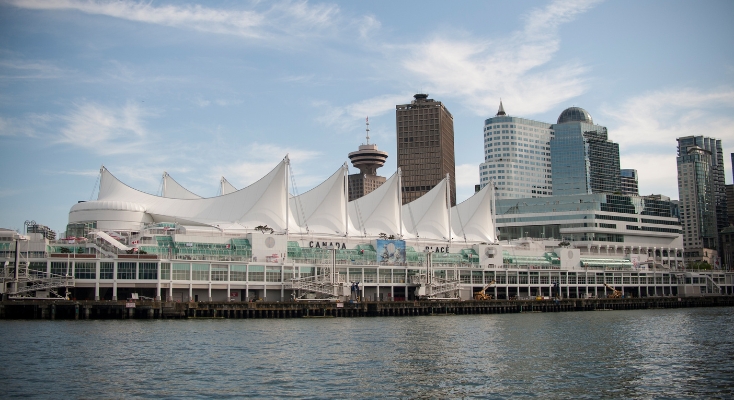
A walk along the waterfront at Canada Place is one of the most quietly rewarding ways to begin a day in Vancouver. The white sail-shaped roof of the terminal is recognisable from both sea and land, and the promenade beneath it offers unobstructed views across Burrard Inlet toward the mountains of the North Shore.
In the early morning, the light comes in low and gold across the water, and the harbour moves at a considered pace. Floatplanes lift off from the adjacent seaplane terminal on short westward runs. During spring and summer, Alaska-bound cruise ships rest adjacent to the Pan Pacific Vancouver hotel at the Canada Place terminal, with the unhurried gravity of something very large and very still.
The Canada Place promenade connects naturally to the broader Seawall, drawing walkers northward along the Coal Harbour foreshore toward the West End. This is not a walk that demands athletic commitment. It asks only for a suitable pace and a willingness to take in what is there: the texture of the water at different hours, the shifting reflections of the North Shore mountains and the steady maritime activity of a working harbour.
Urban blue-green systems like this are increasingly understood as genuine civic infrastructure, not just recreational amenity, contributing to the psychological and social health of both residents and visitors alike.
Along the Seawall Towards Stanley Park
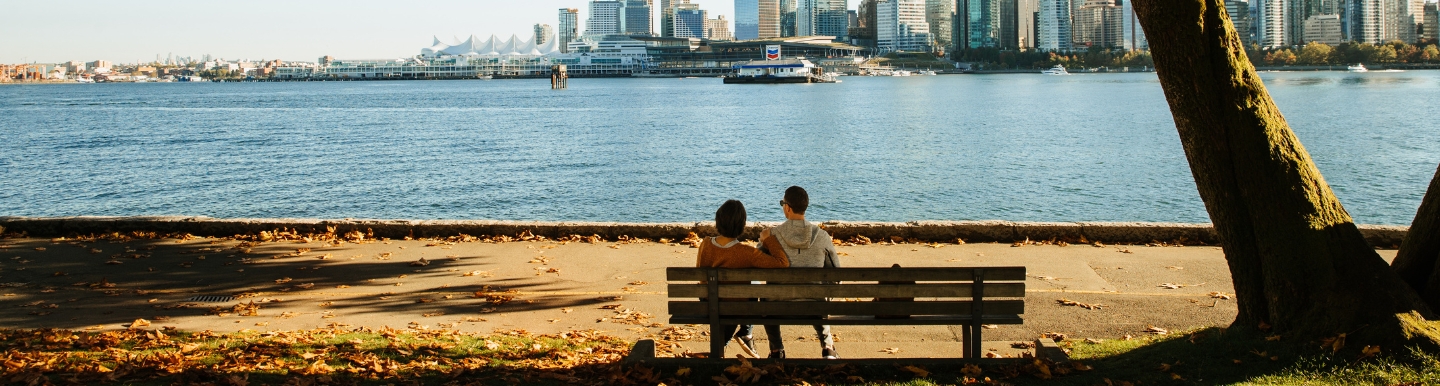
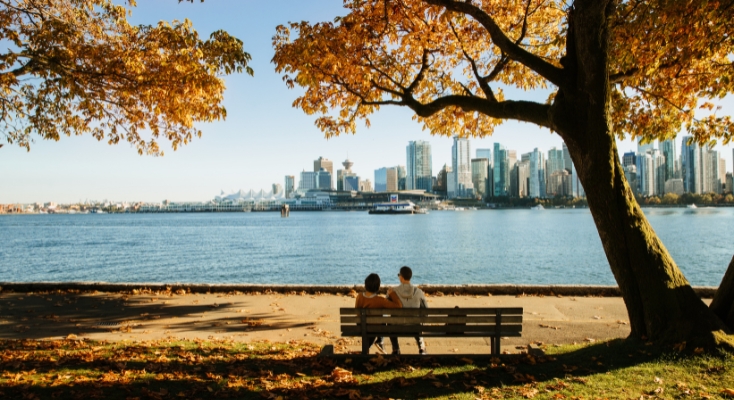
The Vancouver seawall runs in an almost unbroken line from Canada Place to the western edge of Stanley Park and beyond, offering one of the most celebrated waterfront routes in the world. The walk from the harbourfront through Coal Harbour and into the park covers approximately nine kilometres. It passes through several distinct moods of the city: the polished towers of downtown, the quieter residential blocks of the West End and the sudden, ancient density of the park's first-growth forest canopy. At no point does the water leave one's side.
What makes the seawall a restorative experience rather than simply a pleasant one is the quality of sustained, unhurried attention it encourages. Studies on the regeneration of urban blue spaces point to this kind of effortless, open focus as a mechanism for attention restoration, allowing the cognitive load of travel, work and daily life to ease without deliberate effort.
The mind, freed from the demands of navigation and decision-making, settles into a rhythm that mirrors the water's movement. Stanley Park itself deepens this effect, offering forest trails, seashore paths and the broad views of Prospect Point as natural extensions of the blue-space experience begun at the harbourfront.
Sunset on the Inlet
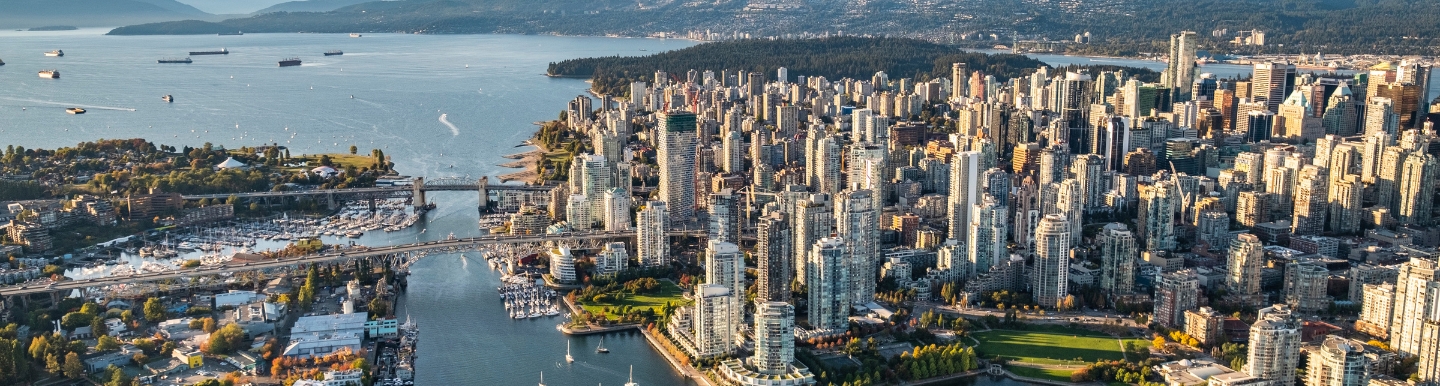
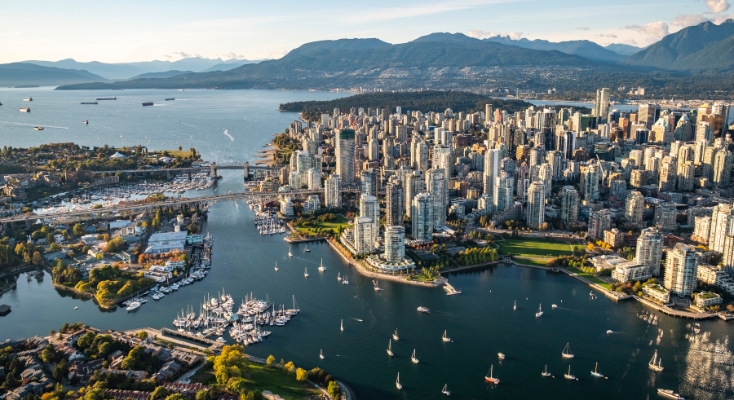
The benefits of blue space are perhaps most tangible at the end of the day, when the light on Burrard Inlet shifts from the clear brightness of afternoon into something richer and more oblique.
From the harbourfront or from the walkway at Coal Harbour, the North Shore mountains take on a depth of colour that changes minute by minute as the sun descends. Watching this is not a passive activity. It is, as blue therapy research confirms, a form of active restoration, engaging the senses in ways that measurably reduce stress and invite what researchers describe as soft fascination.
A new tool developed at the University of British Columbia has mapped the distribution of natural assets across Vancouver, reinforcing what the city's geography makes visually obvious: access to water-adjacent environments is one of the most consistent predictors of well-being for those who live and travel here.
Ending the day with a simple ritual, a coffee watched over the water, a quiet half-hour on a harbourside bench, or the last light observed from an elevated position above the inlet, is not a small thing. It is precisely the kind of unhurried attentiveness that makes a stay in Vancouver feel meaningfully restorative rather than merely busy.
Your Blue Space Sanctuary
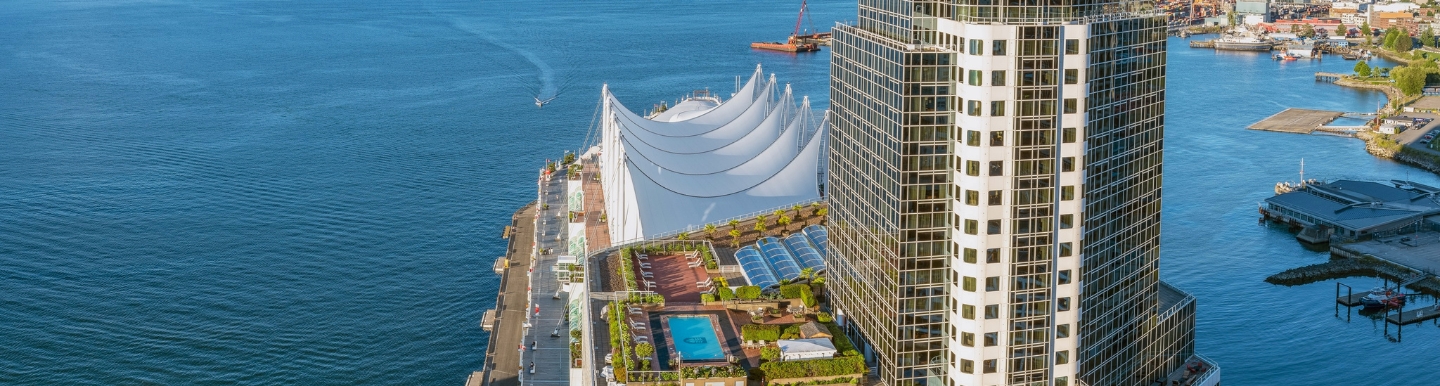
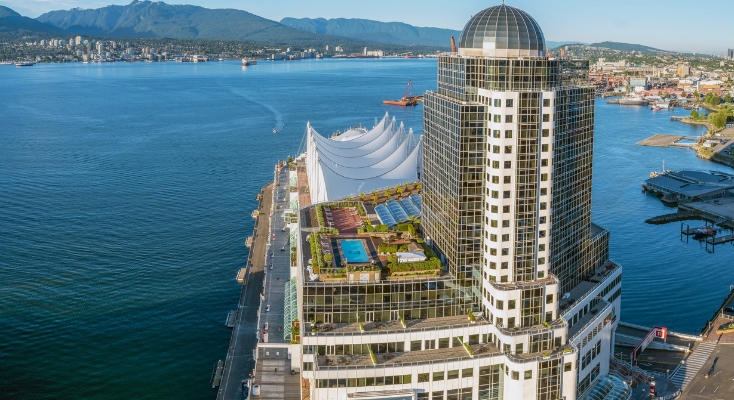
At Pan Pacific Vancouver, we are positioned at Canada Place, directly above the harbour at the point where the seawall begins and the inlet opens to the mountains. The hotel's location is not incidental to the experience described in this article. It is, in the most literal sense, a blue-space address: a place where the water is present at every hour, through every window and from every vantage point the property offers. Guests who wake to a harbour-facing room have already begun the restorative work before they leave their bed.
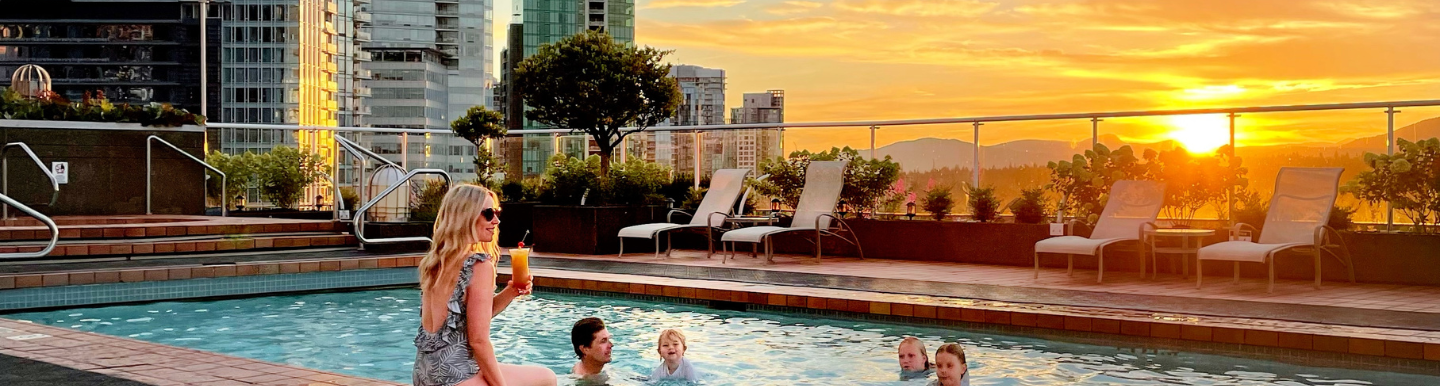
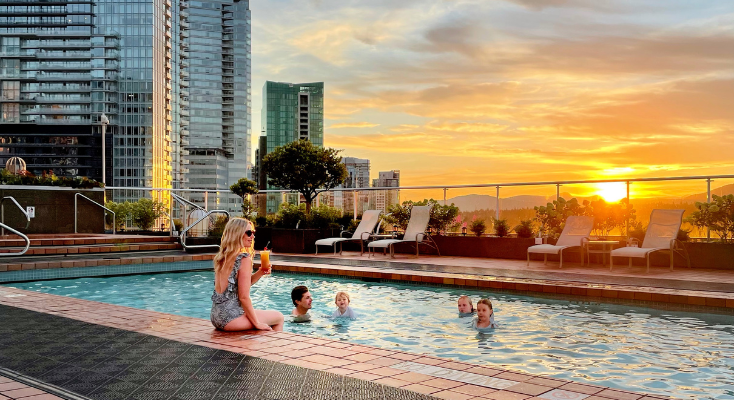
We understand that the kind of rest our guests seek is rarely found through activity alone. Pacific Club access, spa and pool facilities overlooking the waterfront and mountains, and the simple privilege of a room oriented toward the water are all designed as investments in recovery, focus, and well-being. Whether arriving after a long-haul flight, embarking on or returning from a cruise via the Canada Place terminal, or simply making time in a busy itinerary for something quieter, guests find that the harbour does much of the work before the day has formally begun.
Vancouver's blue spaces are generous and freely given, but to fully absorb what the city offers, a waterfront base makes all the difference. We invite you to let the Harbour be your first view in the morning and your last at night, and to experience firsthand why the waterfront in Vancouver is among the most quietly transformative aspects of this city.


Discover More Destination Insights

Unique Landmarks in Vancouver
Find Out More
Best Vancouver Nature Activities for Family Staycations
Find Out More
10 Unusual Things To Do on Your Vancouver Staycation
Find Out More-
HOTELS AND RESORTS


-
SERVICED SUITES


-
WELLNESS AND LIFESTYLE


Toll-Free Room Reservation Numbers
Suite 300-999,
Canada Place Vancouver,
British Columbia V6C 3B5, Canada
Want to Leave Us a Message Instead?
Send EnquirySign up for newsletter
Be the first to know about our exclusive deals.
Download the App


